
Appreciation of U glass Application in Tiangang Art Center 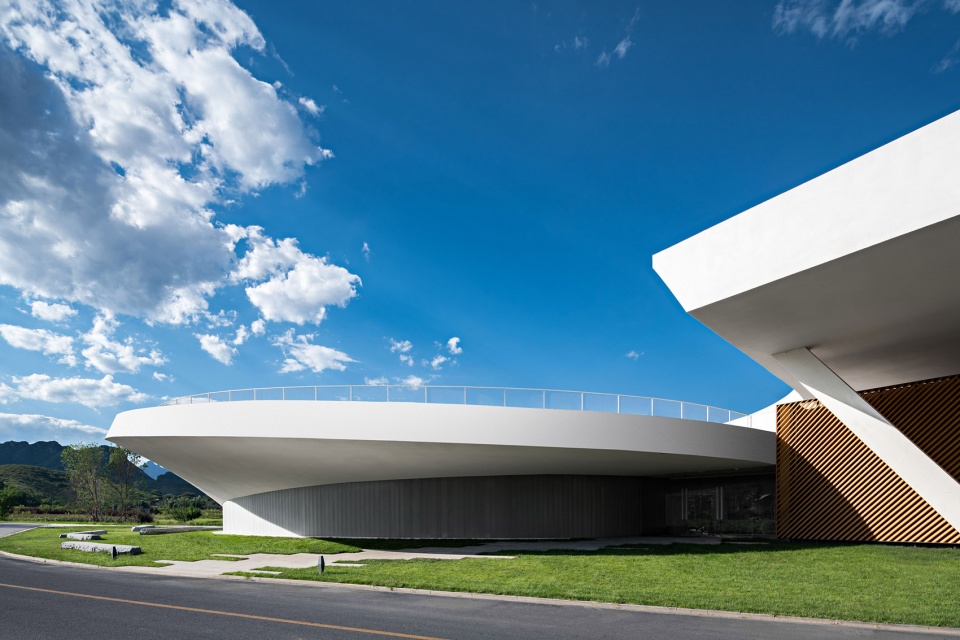
I. Project Background and Design Orientation
Located in Tiangang Village, Yixian County, Baoding City, Hebei Province, Tiangang Art Center was designed by Jialan Architecture. Its predecessor was an unfinished semi-circular “tourist service center”. The designers transformed it into a rural art complex integrating art exhibitions, hotel rooms, and catering services, serving as the “catalyst” for activating the entire Tiangang Zhixing Village. As a key building material, U glass plays a crucial role in connecting nature with art, and privacy with public space. 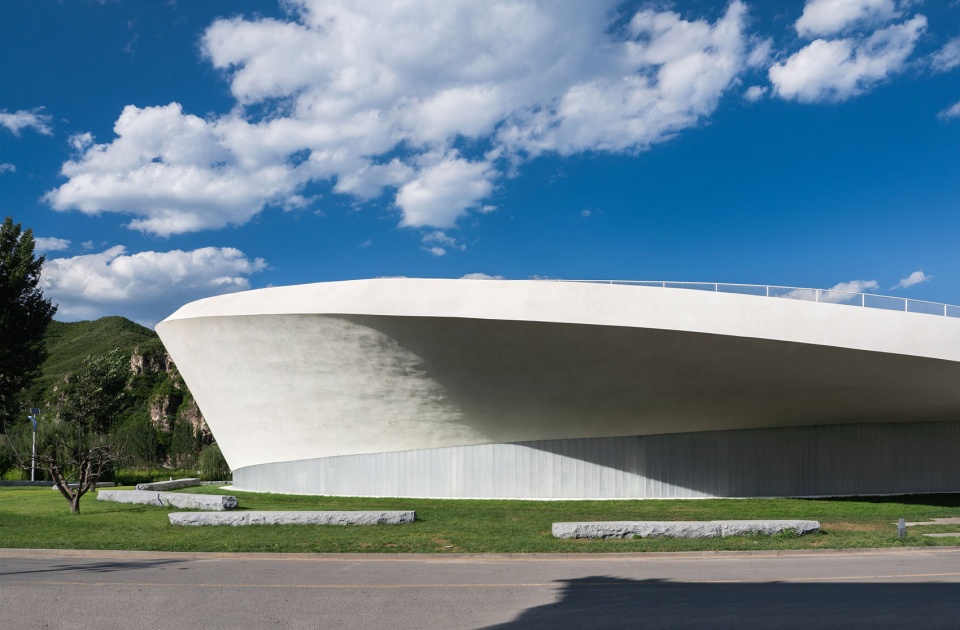
II. Application Strategy and Location of U glass
1. Design Logic for Selective Application
Art exhibitions require an appropriate distance from the outdoor neighborhood—they need natural light while avoiding direct glare that could damage exhibits and affect the viewing experience. Therefore, the designers did not use U glass on a large scale; instead, they arranged it in a rhythmic alternating pattern with white granular painted walls, creating a facades with distinct rhythm.
2. Specific Application Locations
U glass is mainly applied in the following areas:
- Partial exterior walls of the central circular exhibition hall
- Exterior walls of public spaces facing the village and main road
- External corner areas connected to white walls (treated with special structural designs)
This layout not only ensures a suitable light environment for the exhibition hall but also makes the building a striking yet understated artistic landmark in the rural landscape. 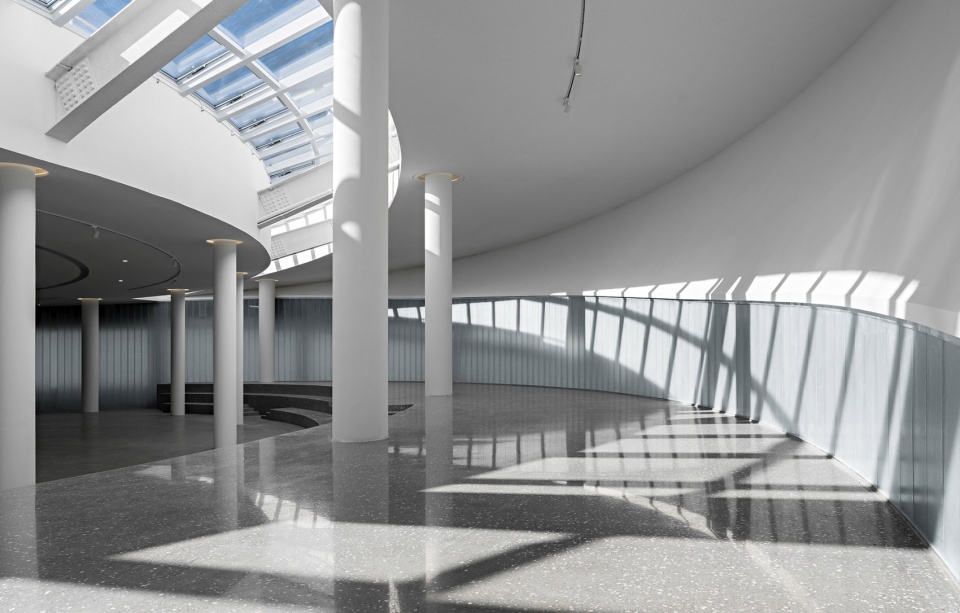
III. Core Value and Effect Appreciation of U glass
1. Light and Shadow Aesthetics: A Hazy and Restrained Spatial Atmosphere
The most prominent value of U glass lies in its unique light and shadow effects:
- **Daytime**: It introduces natural light in a controlled manner, filtering out harsh direct light to create a uniform and soft diffused light environment indoors, protecting artworks from glare damage.
- **Nighttime**: Indoor lights shine through the U-shaped glass, giving the building a hazy halo effect, like a dreamlike carrier floating in the countryside and adding a surreal space for imagination.
- **Visual Isolation**: It blurs the outdoor village scenery subtly—while maintaining a connection with the external environment, it creates a relatively independent viewing atmosphere for art exhibitions. 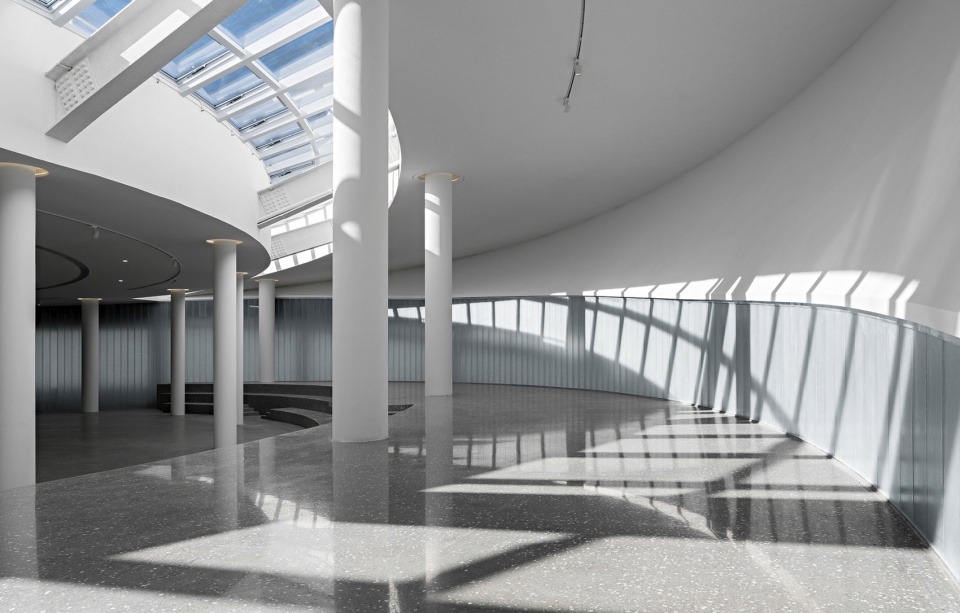
2. Functional Performance: Balancing Practicality and Energy Efficiency
As a rural building, U glass also performs well in functionality:
- **Energy Conservation and Thermal Insulation**: It effectively controls the amount of light entering the indoor exhibition hall and regulates temperature, reducing energy consumption for air conditioning and lighting.
- **Sound Insulation and Noise Reduction**: It provides excellent sound insulation, blocking external rural noise and creating a quiet artistic space.
- **Structural Strength**: U glass has high mechanical strength, requiring no complex keel support. Its simple construction makes it suitable for the building conditions of rural projects.
3. Architectural Aesthetics: Dialogue with the Rural Environment
U glass integrates perfectly with the overall architectural design:
- **Sense of Rhythm**: Its alternating arrangement with the white main structure forms a rhythmic facade composition.
- **Sense of Suspension**: The nighttime light effect echoes the halo of the column cap roof, enhancing the overall “sense of suspension” of the building.
- **Integration with Local Context**: The contrast between transparent and translucent materials allows the modern art building to blend into the rural environment while retaining its unique artistic temperament. 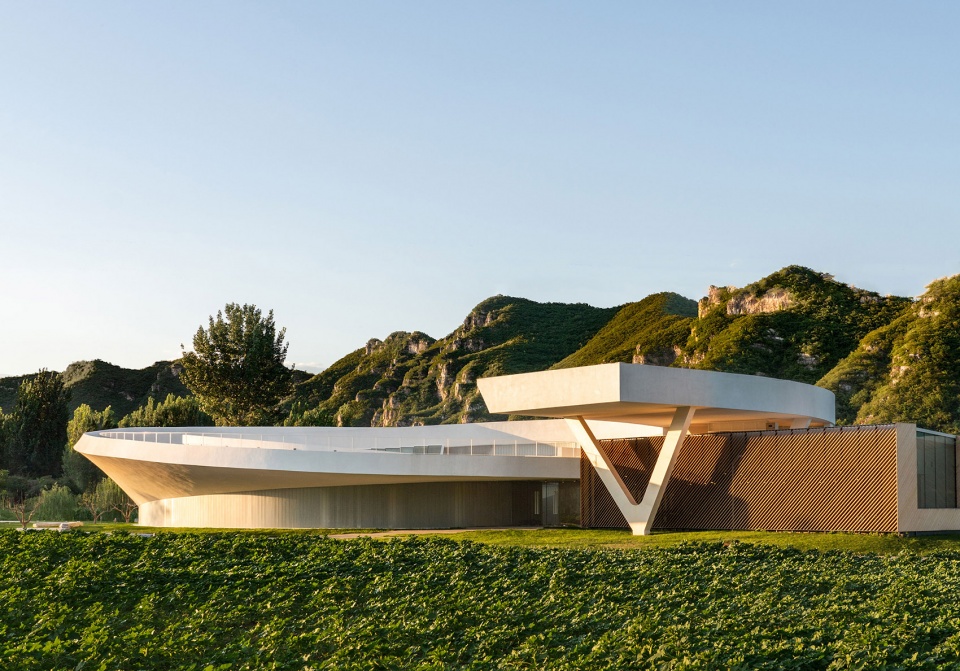
IV. Ingenious Details in Structural Design
The designers demonstrated exquisite skills in the structural treatment of U-shaped glass:
- **External Corner Connection**: Through subdivision and special joint design, they solved the problem of connecting U glass curtain walls with wall external corners.
- **Curved Surface Adaptation**: U glass can be made into curved shapes, perfectly matching the semi-circular main structure of the building.
- **Cost Control**: Reasonable design ensures the desired effect while controlling construction costs, conforming to the economic requirements of rural revitalization projects.
V. Conclusion: Material Innovation in Rural Art Spaces
The ingenious application of U glass in Tiangang Art Center sets an excellent example for rural architecture. It not only showcases the aesthetic potential of U glass as a building material but also embodies the designers’ “problem-solving” design philosophy—under limited conditions, through material selection and structural innovation, they balanced the needs of art display, functional requirements, and rural context, creating a unique art space that is both modern and rooted in local culture, and both open and private.
Post time: Dec-16-2025