
Chongqing Liangjiang People’s Primary School is located in Chongqing Liangjiang New Area. It is a high-quality public primary school that emphasizes quality education and spatial experience. Guided by the design concept of “Openness, Interaction, and Growth”, the school’s architecture features a modern, minimalist style full of childlike charm. It not only supports the orderly development of teaching activities but also adapts to the physical and mental development characteristics of primary school students. In terms of material selection, the school and the design team prioritized safety, environmental protection, and low maintenance. As one of the core architectural elements, U glass is highly consistent with the overall design concept of the campus and is widely used in multiple functional areas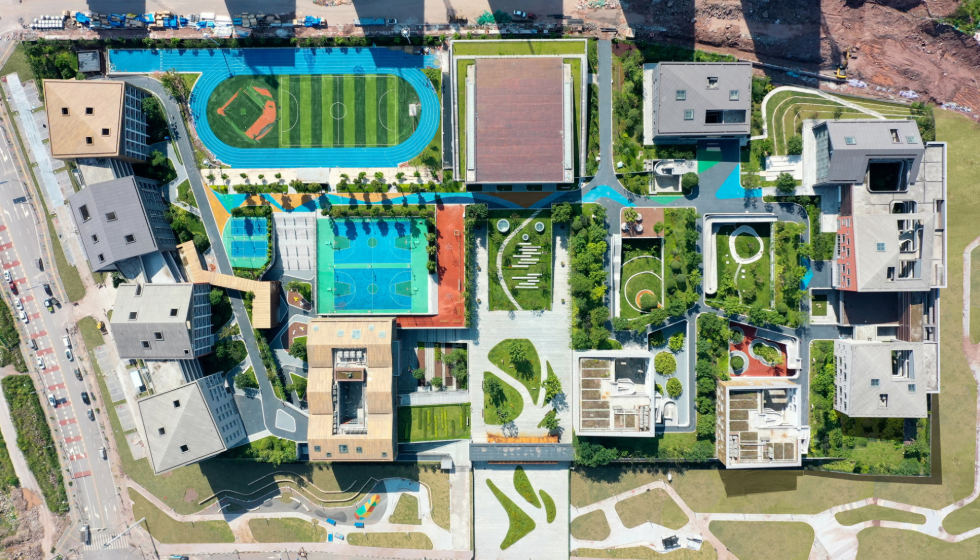
U glass has higher mechanical strength and stronger impact resistance than ordinary flat glass. It meets the safety standards of campus buildings and can effectively avoid the risk of accidental collisions during primary school students’ activities.
With the characteristic of transmitting light without being transparent, it can filter strong light and introduce soft natural light, avoiding glare in classrooms that affects eyesight while protecting the privacy of internal campus activities. Its surface texture requires no secondary decoration, is dirt-resistant and easy to clean, reducing the later maintenance costs of the campus. Moreover, the material itself is low-carbon and environmentally friendly, in line with the concept of a green campus. Its light and transparent texture breaks the sense of heaviness of traditional campus buildings. When matched with auxiliary materials in warm colors, it creates a friendly and lively campus atmosphere that meets the psychological needs of primary school students. U glass is not used alone but is organically combined with materials such as real stone paint, aluminum 扣板 (aluminum ceiling panels), and wooden grilles. For example, on the facade of the teaching building, U glass and light-colored real stone paint are arranged alternately, ensuring lighting while avoiding the coldness brought by large areas of glass. In indoor spaces, it is paired with wooden grilles to enhance the natural atmosphere and make the campus more approachable.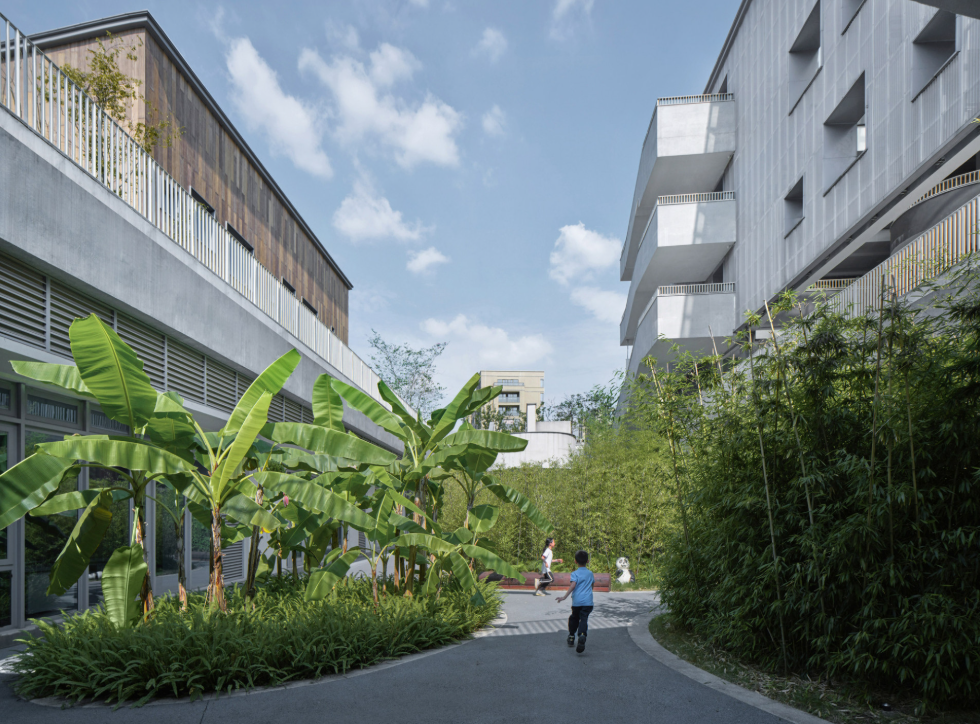
Key Application Positions of U glass
1. Facade of Teaching Buildings
It is mainly applied to the exterior wall areas of classrooms on low floors. It not only solves the problem of noise isolation for the campus adjacent to streets (or residential areas) but also makes the interior of classrooms bright without glare through soft lighting, providing a comfortable light environment for classroom learning.
Some facades are decorated with colored U glass (such as light blue and light green) to echo the aesthetic preferences of primary school students and make the building more dynamic.
2. Indoor Space Partitions
It is used as partition walls between classrooms and corridors, offices and lesson preparation areas, and multi-functional activity rooms. The translucent characteristic can not only clarify spatial boundaries but also not block the line of sight, facilitating teachers to observe students’ dynamics at any time. At the same time, it maintains spatial transparency and avoids oppression.
In areas such as libraries and reading corners, U glass partitions divide independent quiet spaces without separating the overall layout, creating an immersive reading atmosphere.
3. Corridors and Lighting Strips
For the corridors connecting different teaching buildings on the campus, U glass is used as the enclosure material. It can not only shelter from wind and rain but also fill the corridors with natural light, becoming a “transition space” for students’ activities during breaks and avoiding the stuffiness caused by closed corridors. U glass lighting strips are installed on the top of teaching buildings or the side walls of stairwells to supplement natural light for public areas, reduce the use of artificial lighting, and practice the concept of energy conservation.
4. Enclosure of Special Functional Areas
In special functional areas such as science laboratories and art classrooms, U glass is used for wall surfaces or partial enclosure. It can not only display students’ practical achievements (such as art works and experimental models) but also adapt to the teaching needs of different courses through light adjustment (for example, art classes require uniform light, while science classes need to avoid strong light directly irradiating instruments).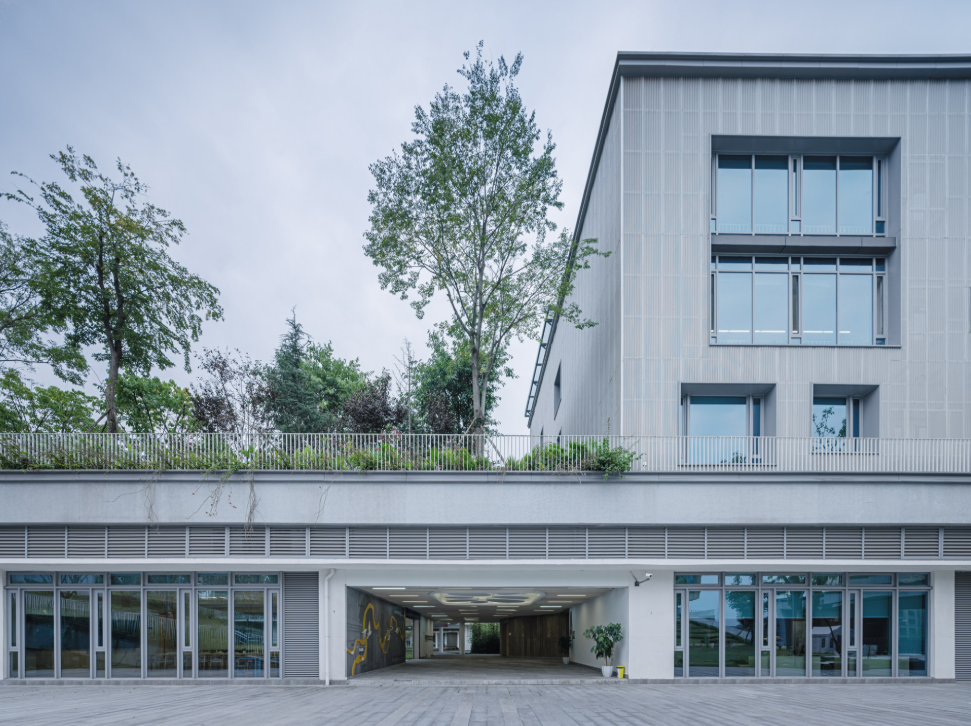
The application of U glass in Chongqing Liangjiang People’s Primary School does not blindly pursue formal innovation but closely focuses on the core demands of campus buildings: “safety, practicality, and education”. Through precise location selection and reasonable material matching, U glass not only solves practical problems such as lighting, sound insulation, and privacy protection but also creates a warm, lively, and transparent growth space for primary school students, truly realizing “functions serve education, and aesthetics integrate into daily life”. This design idea of deeply combining material characteristics with campus scenarios provides a reference direction for the innovative application of materials in primary and secondary school buildings.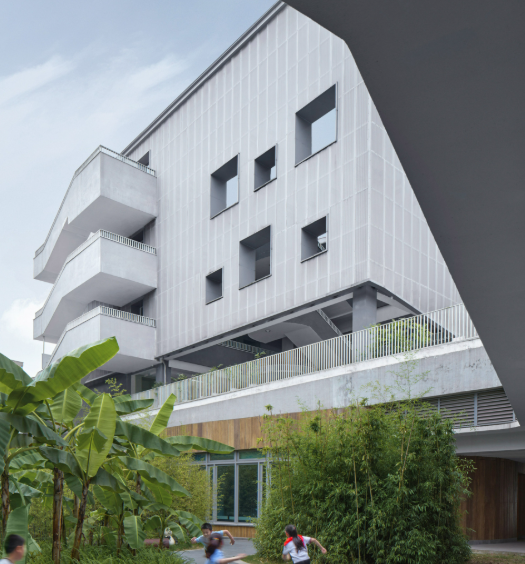
Post time: Dec-09-2025